
Property

Investments That Stand The Test Of Time
Why Invest In Property?
Here are 8 things you should be thinking about when considering property in your plans for generating ongoing wealth for you and your family.
Latest Property News
1. Yield v Capital Growth
As with any type of investment the gain can come from the capital growth (price increase) of the asset over time and from the Yield it presents (percentage of income as a proportion of the money invested). Most often an investment is a combination of the two but not in equal measure. For example, in the past 20 years London property has seen the highest capital value increases of all property locations but the lowest yields. Typically a London property will net less than 3% annually (total of rent received less costs, excluding finance costs). Property in Newcastle generates a yield twice that, however, London property prices have increased more than the Newcastle property by more than the difference in yield, therefore if you had invested an equal amount in both 10 years ago and sold at the same time, your total gain form the London property would be greater than the Newcastle property. Whether that remains true over the next 10 years is open to debate.
If you are thriving, near to retirement and happy with your current level of wealth but are looking for a secure high yield then you may prefer to forgo (an uncertain) price growth for a higher yielding property that will give you more income today.
If you are a younger investor looking to grow your retirement fund you will be looking at the overall future position with more emphasis on potential capital growth.
It also important to remember that net yield is what is left after expenses. You may be able to buy 3x Three-bedroom freehold houses in Newcastle for the cost of a tiny flat in London but that is 3 boilers, 3X bathrooms, 3X roofs, 12 rooms of new carpets, 3X cost of tenancy renewals and a greater cost of maintenance. A small London flat has just the one boiler, only one carpet etc. The downside is that a void period or problem tenant will take you into a negative position if you have all your eggs in one basket whereas several properties spread your risk of void periods. Again, if one eye is kept on capital growth, the long-term net position may be more forgiving of a void period.
2. Freehold or Leasehold
If buying Freehold, you own the property and the land it sits on in perpetuity. Leasehold gives you the right to occupy the space the property occupies until the end of the lease at which time you give it up worthless. Leasehold is generally considered a poorer investment as you own a wasting asset, but you do have a right to extend your lease for a cost which increases the nearer to the end of your lease.
You also have the opportunity to buy the freehold collectively with the other leaseholders subject to certain conditions. Other problems of Leasehold ownership stem from a lack of control over the property including maintenance companies over charging and underperforming and unhelpful freeholders that have ultimate control. Property investors generally prefer to own freehold whenever possible.

3. Commercial Property
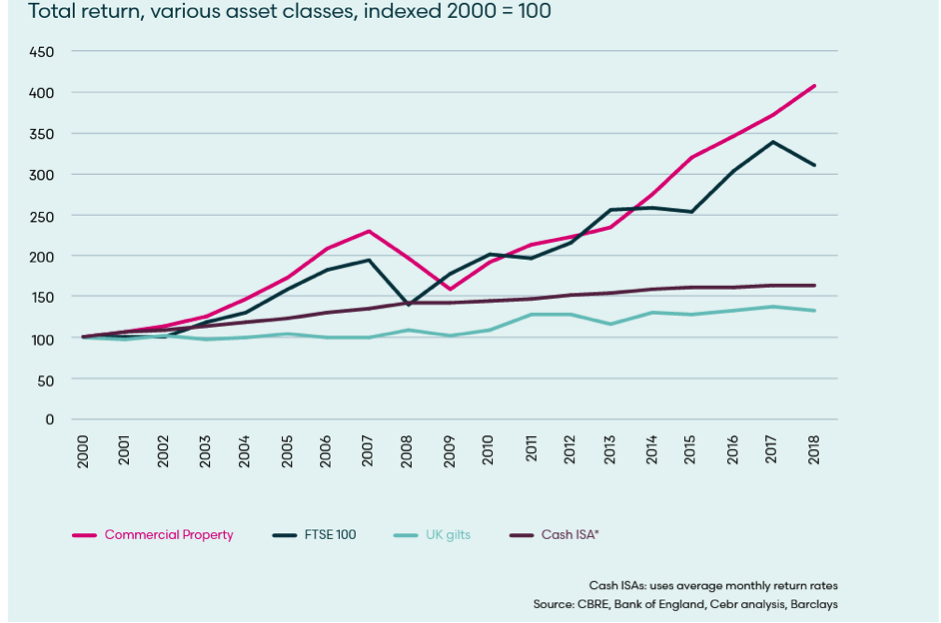
Shops, offices, workshops, garages; A vast array of commercial properties are becoming increasingly attractive to private investors as total returns (rents plus capital growth) have exceeded stock market returns at various times. Commercial property produces a higher yield than residential property, typically 5-8% for a well let property. Commercial property also benefits from having repairing obligations on the tenant so costs like boilers, decorating and repairs falls to the tenant leaving a higher net yield to the landlord. Tenants often sign up to long leases, 5, 10, 15 years have less voids between lets.
Commercial property is valued as a multiple of the yield generated rather than bricks and mortar value of residential property. Therefore, you may see high street commercial property being sold for significantly less than an equivalent residential property of the same size. Recent changes in planning rules have allowed for permitted developments- change of use from commercial to residential- and small investors have turned developer by altering shops and offices to flats for large gains.
Commercial Property can therefore be a good vehicle for both strivers and thrivers. A good starting point is to look at what is being sold at auction or being offered by a local commercial agent.
4. Self Invested Pensions (SIPP)
5. Should you set up a company?
6. Sourcing your property
7. Buying Overseas
Most people who buy overseas for investment end up regretting their purchase, common reasons include underestimating the trues costs, expense and difficulties of dealing with foreign legal systems, exchange rate fluctuations, maintenance, demand and resale issues. Rather than buying an overseas property with the idea of rent part time and part holiday home, consider instead a UK investment that has far fewer unknowable and costly issues and spend the rent received on holiday wherever you want to go.
8. Property Investment funds and REITS
Download Your Free Guide
Want To Know More About Investing In Property?
Download your free guide into the courses and resources that can take you from interested novice to active investor!
- No Money Down property investing.
- Buy 2 Let made simple.
- Commercial property opportunities.
- Conversion & development.
- Finding & financing property deals.
- Rent to Rent.
- Serviced accommodation.